What Shapes the Taste and Smell of Florida Tap Water?
Florida tap water can smell or taste different by neighborhood, season, faucet, or even time of day. A change may come from the water source or treatment, but household plumbing and drains can also affect what you notice. This guide explains common clues, how to narrow down the cause, and when to contact your utility or seek local advice.
Why Florida tap water can taste different
Taste and smell reflect what is in the water, how it has been treated, and what it passes through before reaching the glass. A noticeable odor does not, by itself, identify its cause or tell you whether water is safe to drink. The useful starting point is to notice what changed and where the change occurs.
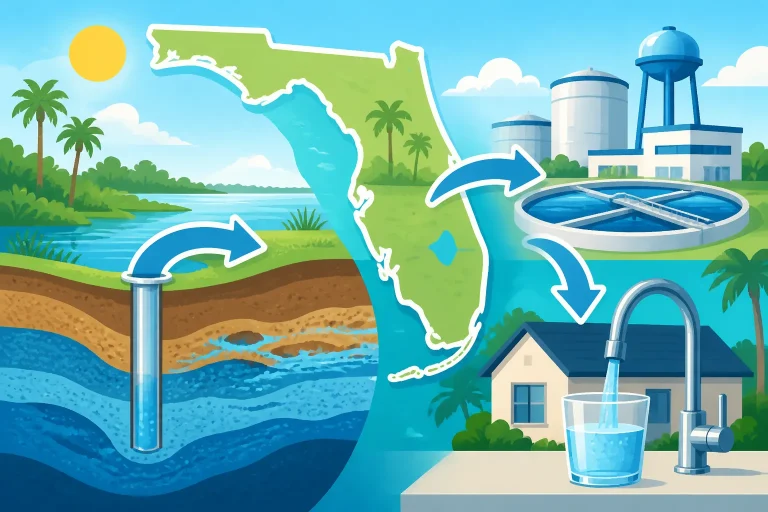
Florida’s supply makes source conditions an important part of the picture. Florida’s Department of Environmental Protection says Florida’s ground water provides 90% of the state’s drinking water. The Florida Department of Health describes aquifers as the primary source of drinking water in Florida. The groundwater serving a particular community can have its own mineral profile, and utilities may treat or blend water to meet their operating needs.
Even neighbors can notice different flavors. They may receive water from different providers, use different plumbing materials, or have different filters, water heaters, and faucet fixtures. A utility’s annual report describes regulated water-system results, but it cannot necessarily describe the water after it has traveled through a particular home’s plumbing. See Where Florida Drinking Water Comes From, Aquifer to Utility and Does a Florida Water Quality Report Describe the Water at Your Tap? for more on those distinctions.
A change in taste may also be a change in perception rather than a change in the supply. Temperature, the glass or bottle, recent cleaning, and what else is in the room can affect how water smells or tastes. Those possibilities do not rule out a water-quality issue; they are reasons to compare the tap water carefully before deciding what to do.
A practical way to begin is to ask:
- Does the taste or odor come from every cold-water tap, or just one fixture?
- Is it present in cold water, hot water, or both?
- Does it fade after water has run briefly, or get stronger?
- Do other household members or nearby residents notice it?
- Did it start after plumbing work, a filter change, a water-heater service, or a utility notice?
These observations help separate a supply-wide change from a fixture or plumbing issue. They are not a substitute for a utility investigation or a lab test when one is warranted.
Common tastes and smells, and what they may suggest
Describing the odor can help a utility or plumber understand what to check. It is a clue, not a diagnosis: similar descriptions can have different causes, and the same cause may be described differently by different people.
| What you notice | Possible places to investigate | Useful comparison |
|---|---|---|
| Pool-like or bleach-like odor | Disinfection in the water supply, a change in treatment, or a nearby source of the smell | Compare cold water at different taps and ask the utility whether its treatment has changed |
| Earthy, musty, or dirt-like taste | Source-water conditions, treatment, or a local fixture or drain | Compare several cold-water taps and check for a notice or utility update |
| Rotten-egg or sulfur-like odor | A water heater, plumbing, a well, or a supply issue | Compare hot and cold water at the same faucet |
| Metallic taste | Faucet components, household plumbing, or water chemistry | Compare taps and ask whether the utility can advise about sampling |
| Salty or brackish taste | A change in the source or water supply, or another local cause | Stop guessing from taste alone; contact the utility and ask what to do |
| Musty or stale taste at one fixture | An aerator, filter, drain, or local plumbing | Compare that fixture with another cold-water tap |
| Chemical, plastic, or solvent-like odor | Household products nearby, plumbing materials, or a supply concern | Avoid assuming the source; report a persistent or widespread change |
Chlorine or chloramine odor
Utilities may use disinfectants as part of water treatment. Some people notice a swimming-pool or bleach-like smell more readily than others, and the intensity can seem different across neighborhoods or over time. A chlorine-like odor is not proof that the water is overtreated, nor does the smell alone confirm that a disinfectant is present at a particular level.
Florida DEP’s example Stage 1 monitoring plan format is for Chlorine and/or chloramines monitoring. That describes the monitoring plan format, not a result for your home or a guarantee about a specific utility’s treatment. If a pool-like smell is new, strong, or affecting many taps, ask your water provider whether its treatment or operating conditions have changed. Chlorine or Chloramine? The Pool Smell in Florida City Water explains what to ask and how these treatment terms differ.
Earthy or musty odors
An earthy, musty, or dirt-like taste can be connected to source-water conditions or treatment changes, but the words people use to describe these odors are subjective. A smell that seems earthy to one person may seem moldy or stale to another. A local issue, such as a dirty aerator or a drain odor, can also make water seem musty even when the water supply is not the source.
If several cold-water taps have the same change, note when it began and ask the utility whether it is aware of a change. If the odor appears only at one fixture, look at that fixture and its drain before assuming the whole supply is affected. For a closer look at these particular clues, see Earthy or Musty Florida Tap Water: Source Water or a Treatment Change?.
Rotten-egg or sulfur-like odors
A sulfur-like smell may be coming from the hot-water system rather than the water entering the home. Compare hot and cold water at the same faucet. If the smell is limited to hot water, the water heater deserves attention; if it is present in cold water at several fixtures, ask the utility whether the supply is involved. A smell description alone cannot confirm a specific chemical or plumbing problem.
Do not try to solve a persistent hot-water odor by adding chemicals or making a plumbing adjustment you are not equipped to do. A plumber can inspect the water heater and related plumbing. Rotten-Egg Smell From the Hot Tap Only? Florida Water Heater Clues covers that comparison in more detail.
Metallic, salty, or chemical tastes
A metallic taste may be associated with a faucet, pipes, or other plumbing materials, but taste cannot identify a particular metal. If you are concerned about lead, for example, smell and taste are not a way to check for it. Ask your utility or local health department what testing options are appropriate, and review Lead in Florida Tap Water: Testing, Action Levels and Next Steps if lead is the concern.
A salty or brackish flavor can be unsettling, especially when it appears suddenly. Do not rely on taste alone to determine the cause or whether water is suitable for drinking. Contact the utility and describe the change. If the odor or taste resembles a chemical or solvent, avoid making assumptions based on a filter or a brief flush; contact the utility for instructions.
Start by locating the source
The pattern of the change often tells you what to check next. A whole-house change that appears at multiple cold-water taps points to a different set of questions than an odor at a single sink or only in hot water.
Compare fixtures and water temperatures
Use cold water for an initial comparison. Check a kitchen tap and another cold-water fixture, then compare hot and cold at the same faucet. If only one tap is affected, the cause may be local to its aerator, faucet, drain, or plumbing. If hot water alone smells different, consider the water heater and ask a plumber for help.
If the same change appears in cold water from multiple fixtures, contact the utility and ask whether it has received similar reports. The utility can tell you whether it knows of a supply or treatment issue, whether there is an advisory, and what steps customers should follow. One Smelly Faucet in a Florida Home: Drain, Aerator or Water Supply? provides a focused way to distinguish those possibilities.
Check the aerator, drain, and nearby surroundings
A faucet aerator can collect sediment or debris. A sink drain can also produce an odor that seems to come from the water, particularly when water is running. To separate those smells, fill a clean glass with cold water and move it away from the sink before smelling it. If the odor stays at the sink but not in the glass, the drain or nearby surroundings may be involved.
You can inspect and clean an aerator if you know how to remove it safely and follow the faucet manufacturer’s instructions. If the odor remains in the water in a clean glass, appears at other taps, or is accompanied by a noticeable change in appearance, do not assume cleaning the fixture has resolved the issue. Keep notes and contact the utility if the change persists.
Cleaning products, stored chemicals, paint, fuel, or other strong-smelling materials can also affect what you smell near a faucet. Keep products away from drinking-water fixtures and do not pour chemicals into a sink to test whether the odor changes. If the water itself smells chemical-like when sampled away from the sink, report that to the utility.
Compare with neighbors and check for notices
Ask nearby residents whether they have noticed the same change, but treat their reports as additional clues rather than proof. A neighbor may use a different provider, be on another part of the distribution system, or have different indoor plumbing. If the change is widespread, that is useful information to give the utility.
Check for a water-quality notice or service update from the provider that serves your address. A city boundary does not always tell you which provider serves a specific property. If you are unsure, How to Confirm Which Water Provider Serves a Florida Address explains how to identify the right utility. For current test information between annual reports, see How to Check Current Water Quality Data for Your Florida Utility.
A utility report and an emergency notice serve different purposes. An annual report summarizes monitoring information; a notice may give specific instructions about a current concern. If a notice applies to your address, follow its instructions rather than relying on taste, a neighbor’s experience, or a household filter.
Consider recent household work
Think about what changed shortly before the odor or taste appeared. A new faucet, plumbing repair, water-heater service, filter replacement, softener adjustment, or long period without using a fixture may be relevant. If a filter was recently installed, check that it is assembled and maintained according to the manufacturer’s instructions. A filter that is not designed or certified for the concern you have may not address it.
If a change began after plumbing work, contact the plumber or contractor who did the work and explain the timing. If it began after utility work or affects several homes, contact the water provider. Keeping these possibilities separate can prevent an unnecessary equipment purchase or an inspection aimed at the wrong part of the system.
What a household check can and cannot tell you
Simple comparisons are helpful for locating a likely source, but they cannot identify a contaminant or confirm that water is safe. Taste and smell are sensory observations, not lab results. Some water-quality concerns have no noticeable taste or odor, while harmless or nuisance conditions can be strong-smelling. Do not use your senses as a safety test.
For a basic comparison, use a clean glass and fresh cold water. Avoid glasses that may have soap, food, or beverage residue. Take notes about which fixture and temperature were checked, whether the odor was present in the glass away from the sink, and whether the change occurred at other taps. Record when it began and any recent plumbing or treatment work. These details can make a call to the utility or a plumber more useful.
A home taste-and-odor check does not tell you whether a water sample contains lead, bacteria, nitrate, PFAS, or any other contaminant. If you need results for a specific concern, choose a test that measures that concern and follow the sampling instructions. The appropriate testing route depends on whether the property receives public water or uses a private well. Utility Report or Home Test? Choosing a Filter or a Florida Property explains how to think about those options.
Do not buy a filter simply because it promises better-tasting water. Treatment equipment is designed for particular contaminants or aesthetic concerns, and performance depends on the exact model, its certification, proper installation, and maintenance. Match any product claim to your test results or the utility’s information. A taste filter is not a substitute for following a water advisory or investigating an unexplained change.
If the concern involves a possible health effect, ask your local health department or a medical professional for guidance. For a persistent or widespread change in public water, contact the official utility using its website for current contact details. This independent guide is not a water utility or a health department.
What to report to your utility or plumber
A clear description is more useful than a guess about the cause. When contacting the utility, describe what the water smells or tastes like, when the change began, and whether it affects hot water, cold water, or several fixtures. Explain whether neighbors have noticed it and mention any recent work or filter changes. Ask whether the provider is aware of a treatment or supply change, whether a notice applies to your address, and whether it recommends sampling or another next step.
If the issue seems limited to one fixture, a plumber may be better placed to inspect the faucet, drain, water heater, or indoor pipes. Tell the plumber whether the odor is present in the glass away from the sink and whether it occurs with hot water, cold water, or both. Those comparisons help narrow the work without treating a smell as proof of a particular fault.
Consider contacting the utility promptly if the change is sudden and affects multiple taps, if several households notice it, or if the water has an unusual chemical or fuel-like odor. Also contact the utility if you see a public notice or suspect the water supply may have changed. Follow any official instructions you receive. If there is an immediate concern about health effects, ask the local health department or a medical professional rather than trying to assess risk from taste or smell.
A practical record to keep
A short note can help identify whether the issue is changing and make your report easier to assess. Record:
- The date and approximate time you first noticed the change.
- The fixtures where it occurs and whether the water is hot or cold.
- How you would describe the taste or odor without naming a presumed cause.
- Whether the water looks different or has visible particles.
- Recent plumbing, water-heater, filter, or softener work.
- Whether neighbors or other people in the household report the same change.
- Any utility notice or advice you received.
Do not delay contacting the utility while gathering details if the change is strong, widespread, or accompanied by a notice. Your observations can support the conversation, but the utility or a qualified professional may need to investigate further.
Reducing nuisance tastes without masking a problem
If the utility confirms there is no current advisory and the issue is an unwanted taste or odor, you can decide whether a treatment product or household adjustment is worthwhile. Start with the cause, not the product. A filter aimed at chlorine taste, for example, may not address a sulfur odor from a water heater, and neither is a general solution for every possible contaminant.
Check any filter’s exact model and certification claims. A broad phrase such as “improves water” does not tell you what the equipment has been tested to reduce. Look for a claim that matches the concern you are addressing, and follow the specified cartridge replacement and maintenance instructions. An old or poorly maintained filter can become a new source of taste or odor.
If a filter or softener is already installed, review its condition and settings before adding another system. Check whether it has been maintained according to the manufacturer’s instructions and whether the water is being routed through the equipment as intended. If you are not sure what the equipment treats, arrange for water testing or ask a qualified water-treatment professional to interpret the results before buying a replacement.
For a temporary taste complaint that the utility has confirmed is not an advisory issue, some households prefer chilled water. That may make the taste less noticeable, but it does not remove contaminants or establish that water is safe. Do not use chilling, boiling, or filtering as a substitute for instructions in an official notice. If a notice says to use bottled water or take another precaution, follow it.
A persistent problem deserves a source check, not repeated purchases of different filters. If the taste occurs only at one tap, investigate the fixture and local plumbing. If it occurs throughout the home, ask the utility about the supply and consider whether a test is needed. If a specific test result identifies a concern, choose treatment based on that result and verify that the equipment is suitable for it. Filter, Softener or Both? Deciding What Your Florida Water Needs offers more context on matching treatment to a measured water issue.
Frequently Asked Questions
Does a chlorine-like smell mean Florida tap water is unsafe?
Not by itself. A smell is not a measurement of disinfectant concentration or a safety determination. If the smell is new, strong, or widespread, ask the utility whether it knows of a treatment change or notice.
Why does my tap water smell different from my neighbor’s?
Homes may have different water providers, plumbing, fixtures, water heaters, and treatment equipment. A neighborhood comparison can help, but it does not establish that both homes receive identical water or have the same issue.
Should I boil water that tastes or smells unusual?
Do not boil water solely because it tastes or smells different. Boiling is not a universal treatment for water-quality problems and may not address the cause. Check for an official notice and follow the utility’s instructions.
Can a refrigerator or pitcher filter fix every odor?
No. Filters are designed for particular reduction claims, and their performance depends on the model, certification, installation, and maintenance. Check the exact claim against the concern you are trying to address, and do not use a filter in place of an advisory’s instructions.
Who should I contact about an unexplained change?
Contact the official water utility if the change affects several taps, appears widespread, or may involve the public supply. Contact a plumber if it appears limited to a fixture, hot-water system, or household plumbing. Ask your local health department or a medical professional about health concerns.
Sources
- Florida Department of Health — Private Well Water Testing – Florida Department of Health (checked November 13, 2026)
- Florida Department of Environmental Protection — Onsite Sewage Program | Florida Department of Environmental Protection (checked November 13, 2026)
- Florida Department of Environmental Protection — Drinking Water Forms & Reporting Formats | Florida Department of Environmental Protection (checked November 13, 2026)
Disclaimer
This article is for general informational purposes only and does not constitute professional advice. Laws, prices and regulations vary by location and change over time. Consult a qualified professional for guidance on your specific situation. Florida Water Hub is not a government agency or water utility and is not affiliated with any public water system.