Fluoride and Florida Tap Water: What Changed at Local Utilities
Florida residents may hear that a utility has stopped adding fluoride and wonder whether that applies to their tap, whether fluoride is still present, or what to check next. The answer depends on the water provider and its current treatment practices. Here’s how to verify what changed, read the available information, and separate utility treatment from household decisions.
What community water fluoridation means
Community water fluoridation means adjusting the amount of fluoride in drinking water to a level recommended to prevent tooth decay, according to the Florida Department of Health. It describes a treatment decision made by a water system; it does not mean every Florida utility treats its water the same way.
That distinction matters when you hear that a city or utility has stopped fluoridating. A change at one provider does not, on its own, tell you what another provider does. Even nearby homes can have different water suppliers, so a city name or county is not always enough to identify the relevant treatment practice. If you are unsure who serves your address, start with How to Confirm Which Water Provider Serves a Florida Address.
It is also useful to distinguish adding fluoride through treatment from whether a water sample contains fluoride. A utility’s decision to stop adding fluoride does not, by itself, establish that no fluoride is present in the water. To understand a particular supply, check the utility’s description of its treatment and any fluoride results it provides. The report and the treatment description answer related but different questions.
The Florida Department of Health describes community water fluoridation as an adjustment to drinking water. That definition helps explain why the term is narrower than “fluoride in tap water.” A treatment program is a deliberate adjustment; a test result is a measurement of what was detected in a sample. A report that mentions a treatment change should not be treated as a substitute for the utility’s test data, or vice versa.
Fluoride information can also be relevant to dental care outside the water system. The State Surgeon General recommends against community water fluoridation, citing neuropsychiatric risk and alternative fluoride sources for dental health. That is the State Surgeon General’s stated position. It does not tell a household what its utility currently does, what a specific tap sample contains, or what dental care is appropriate for an individual. For personal health questions, ask a medical professional or local health department.
The practical starting point is therefore to keep the questions separate:
- Does the utility deliberately add fluoride as part of its water treatment?
- Has that practice changed, and when did the change take effect?
- What does the utility report about fluoride in its water?
- Is the information specific to the system serving your address?
- Do you have a personal dental or health question that calls for professional guidance?
Keeping these questions distinct makes it easier to interpret announcements and annual water reports without assuming that one statement answers everything.
What the reported utility changes say
The facts reported by two Florida utilities show why it is important to check the provider and the date rather than rely on a broad statement about the state.
In its 2025 report, the Miami-Dade Water and Sewer Department states that it stopped adding fluoride at three treatment plants on June 6, 2025. That statement identifies a treatment action, the locations involved within the department’s system, and the date the department gives for the change. It does not establish the practice of every utility in Miami-Dade County or elsewhere in Florida.
In its 2025 report, Emerald Coast Utilities Authority said all fluoride treatment was discontinued in June 2025 to comply with Florida Senate Bill 700. This is ECUA’s description of its own action and reason. It should not be used as a substitute for checking the treatment information from a different water provider.
The two reports are useful examples, not a complete directory of Florida utilities. They also show why a reader should pay attention to the exact wording. One report identifies a stop date and names treatment plants; the other says that all fluoride treatment was discontinued and gives a reason. Those descriptions are specific to the reporting utilities and should be read as statements about their systems.
| What you want to know | What to look for | What not to assume |
|---|---|---|
| Whether the utility adds fluoride | A current treatment description or direct confirmation from the provider | That a neighboring utility follows the same practice |
| When a change occurred | A dated utility notice or report statement | That the report’s publication date is the treatment change date |
| Whether fluoride was measured | Fluoride results in the water report or other utility data | That stopping an addition means a sample must show none |
| Which provider’s information applies | The water supplier serving the service address | That a city or county boundary identifies the supplier |
| Why a utility made a change | The utility’s own explanation or an official policy statement | That another provider gives the same reason |
A report can describe a treatment practice for a particular period, while a notice may give more immediate information about a recent change. If the two documents appear inconsistent, compare their dates and ask the utility which statement reflects current operations. A report written for an earlier period might not include a later change. Likewise, a current webpage may summarize practice without providing the detailed timing shown in a report.
For a broader look at what utility reports can and cannot tell you, see Finding and Reading Your Florida Consumer Confidence Report and Does a Florida Water Quality Report Describe the Water at Your Tap?. Those distinctions are especially useful when you are trying to connect a treatment decision with information about water delivered to a specific address.
Why Florida utilities may have different answers
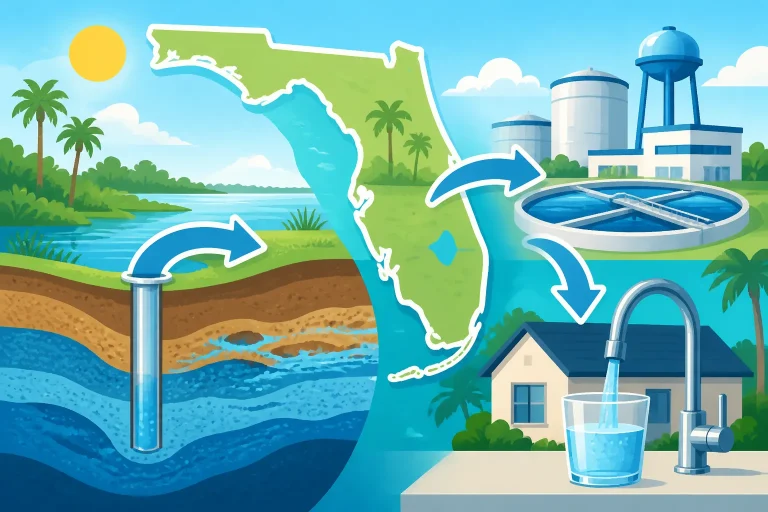
“Florida tap water” is not one single water supply. Public water systems operate separately, publish information about their own treatment, and serve different groups of customers. As a result, residents should not expect one statewide headline or one utility’s report to describe every Florida home.
A report from one provider cannot confirm another provider’s current practices. This remains true when two systems are in the same county, serve neighboring communities, or use similar-looking names. A home’s service address is a better starting point than a city label. If a property is close to a boundary, belongs to a special service area, or receives water through an arrangement involving another provider, ask which utility’s treatment information applies to that account.
There is also a difference between a utility’s stated policy and the results recorded in a water-quality document. A treatment description tells you what the provider says it does. A test result reports what was measured in the samples covered by that document. These details should be considered together, but one does not automatically replace the other. To understand how reports present detected substances and other findings, see How to Read a Florida CCR: Detected Contaminants and Violations.
Timing can make the answer less straightforward. Annual reports cover a defined reporting period, and a treatment change may occur during or after that period. A report released after a change may still contain data from before it took effect. The publication date alone does not tell you the dates covered by every sample or whether a treatment process changed during the period. Check the report’s explanatory notes and sample dates, then ask the provider if the current practice is unclear.
A local announcement can also be easy to overread. A notice saying that a utility stopped adding fluoride addresses an operational change. It does not necessarily state what fluoride concentration will be found at every customer tap, how the water may change as it moves through the distribution system, or what a particular household’s water sample contains. Those are separate questions, and the utility can explain what information it has available.
The State Surgeon General’s position is another distinct piece of information. The Florida Department of Health says the State Surgeon General recommends against community water fluoridation because of the neuropsychiatric risk associated with fluoride exposure. That statement explains the recommendation; it is not a report of a given utility’s treatment, nor a measurement from a customer’s home.
If a change raises personal health questions, avoid treating a statewide recommendation or a utility notice as individualized medical guidance. The appropriate source for a personal question is a medical professional or local health department. If your concern is whether the utility serving your home adds fluoride, ask that utility directly.
How to check your own utility’s current practice
A reliable check begins with identifying the provider. Do not start with a social media post, a general state-level summary, or a neighbor’s recollection. Those may point you toward a question, but they may not refer to the same water system or the same reporting period as your home.
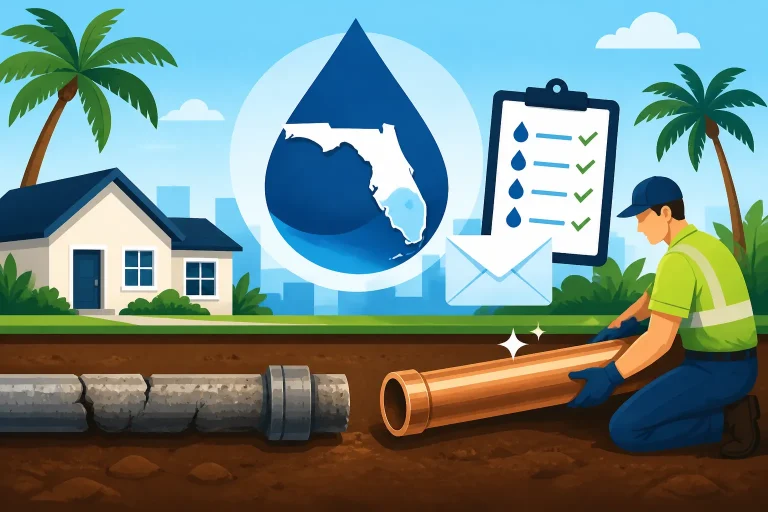
- Identify the water provider for your service address. Use a recent water bill, account portal, rental documents, or the provider’s official information. If you are a renter and do not receive the bill, ask the property manager or landlord which utility serves the building. For more help, see No Well Water Bill in Your Name: How Florida Renters Still Get the CCR—if your home is on a private well rather than utility water, the utility-report approach may not apply.
- Look for a current treatment description. Search the provider’s official materials for its water-quality report, treatment information, or an announcement about fluoride. A report may use wording such as “fluoride treatment,” “fluoride adjustment,” or “adding fluoride.” Read the surrounding explanation instead of relying on a search-result snippet.
- Check the date and reporting period. Note when a notice was issued and which period the report covers. If a document does not make the timing clear, do not guess. Ask the provider whether the statement describes current operations.
- Look for fluoride results separately from treatment details. If the report includes measured fluoride information, check its units, sample dates, and explanatory notes. If no results appear in the document, that does not necessarily establish that the utility has no relevant information; ask what data it can provide.
- Contact the provider with a precise question. Ask whether it currently adds fluoride, when any reported change took effect, and where to find the latest fluoride results for the system serving your address.
A useful question is: “Does the system serving my address currently add fluoride as part of treatment, and where can I find the date and fluoride results for the latest reporting period?” If a recent report refers to a treatment plant, ask whether that plant supplies your service area. This keeps the discussion focused on your provider and avoids assuming that every part of a utility’s service area is supplied in exactly the same way.
For help locating and interpreting information, see How to Ask Your Florida Utility Whether It Still Adds Fluoride, How Florida Water Systems Monitor and Report Fluoride Levels, and How to Check Current Water Quality Data for Your Florida Utility. These resources address different steps: confirming the provider’s practice, understanding monitoring information, and looking for data beyond an annual report.
If the provider’s website has an older report but no clear update, contact the utility using its official website to find current contact details. Ask whether a treatment change occurred after the reporting period and whether the utility has a newer notice or data. A provider’s answer about current operations is more useful than inferring today’s practice from a report that may describe an earlier period.
If you live in an apartment, condominium, or rental home, the utility may still be the source of the building’s water, while the property’s internal plumbing affects what reaches an individual tap. Start by confirming the supplier, then ask the building manager whether there is any additional treatment within the property. A utility-wide report may not answer every question about plumbing or equipment inside a building.
How to read fluoride information in a water report
A water-quality report can help you understand the system’s reported results, but it needs to be read in context. Begin with the provider name and the period the report covers. Then look for the part of the document that describes treatment and the part that lists test results. The report’s cover page, summary, or notes may direct you to the relevant tables.
When you find a fluoride entry, read the entire row and any notes attached to it. The result may be presented with units or a sampling period, and those details matter when comparing one document with another. Do not compare numbers unless they use compatible units and refer to comparable measurements. If the meaning of a result or a reporting term is unclear, ask the utility to explain it.
A treatment statement and a measured result should not be collapsed into one claim. For example, a statement that a system no longer adds fluoride tells you about the provider’s treatment choice. A result in a report tells you what the report says was measured under its sampling and reporting approach. The report may also cover data gathered before a treatment change. Check dates before deciding that a treatment statement and an older result conflict.
An annual report is not always the best source for a recent operational change. It may be published after an event but still describe a period that ended earlier. A short notice or current treatment page may be more useful for confirming what is happening now, while the annual report may provide the sampling context. If the documents leave a gap, ask the utility to confirm the current process and explain which results apply to the period you are asking about.
Keep “not listed” separate from “not present.” A document may not include a detail you are looking for, or it may use a different format from another utility’s report. The absence of a line in one document is not enough to draw a conclusion about what is in the water. Ask whether the provider monitors or reports that information and where the relevant results are published.
If you are comparing reports from different years, note whether the provider changed its treatment, its reporting format, or the way it summarizes results. A change in the layout or wording does not necessarily mean the water itself changed. Read the notes, verify the units, and ask the provider to clarify any unexplained difference. Is Your Water Getting Better or Worse? Comparing Older Annual Reports offers a useful framework for comparing reports without treating formatting or timing differences as changes in water quality.
If the report says the system meets applicable requirements, that statement is not a substitute for checking every line or for asking about a personal concern. A utility report describes the regulated system and the information the provider reports; it is not an individualized assessment of a particular tap or household. If your question is about a specific home sample, ask the utility whether it offers relevant information or consult a qualified water-testing professional. For a broader explanation of how report language should be interpreted, see Meets All Standards: Reading That Promise in a Florida Water Report.
Finally, do not assume that a report from a nearby city is the right one for your property. The provider serving your address is the key link between the report and your tap. If you are uncertain, verify the provider first, then use that provider’s current documents.
What the change means for household decisions
For most residents, the first useful step is to verify the local utility’s practice—not to buy equipment or change a routine based on a general headline. The information available in a report or notice can answer whether the provider says it adds fluoride, but a household decision may depend on a different question, such as the measured water result or personal dental guidance.
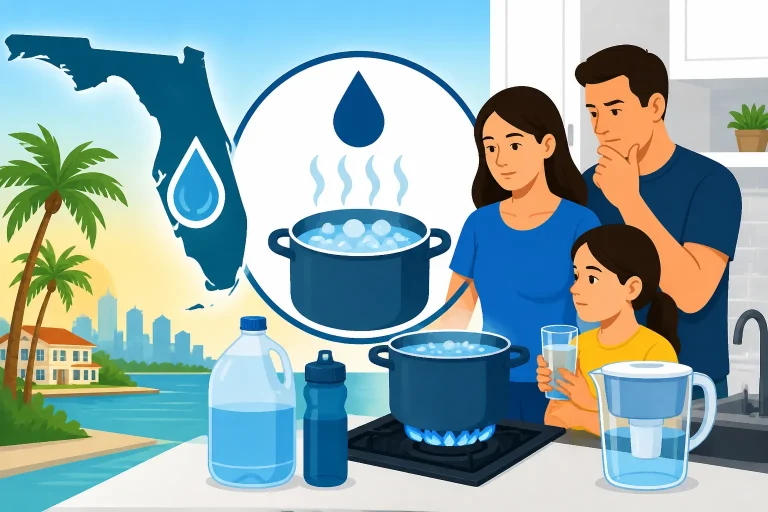
A treatment product should not be selected based on a utility announcement alone. Products differ in what they are designed or certified to reduce, and a product’s label may not answer whether it suits your water or your goal. If you are considering a filter, match its specific certification claims to the water information you have and follow the manufacturer’s maintenance instructions. For help weighing treatment options, see Which Water Tests to Run Before Buying a Filter in Florida and Filter, Softener or Both? Deciding What Your Florida Water Needs.
Do not assume that every filter removes fluoride or that a filter designed for one purpose is suitable for another. Check the exact model’s documentation, the substances it is certified to reduce, and the conditions under which that claim applies. If you cannot match a product’s claims to your water results, get clarification before relying on it. Treatment choices should be based on the specific issue and a verified result, rather than a broad concern about water in the state.
The same care applies to bottled water or other sources. A change in municipal treatment does not, by itself, tell you whether you need to switch water sources, add home treatment, or make a dental-care change. Ask the utility about the water it supplies and speak with a medical professional or local health department about personal health questions. For questions about fluoride sources beyond tap water, No Fluoride in the Tap Water: Other Fluoride Sources DOH Lists may help identify topics to discuss with a qualified professional.
Renters and residents in shared buildings may have an extra step. Confirm whether the property receives utility water and ask whether the building has any separate treatment equipment. If a building system is present, its maintenance and service records may matter to understanding what reaches the tap. A city utility report alone will not describe every piece of equipment inside a private building.
It is reasonable to want a direct answer, but there may be a difference between “the utility does not add fluoride” and “the water at my tap has no fluoride.” If that distinction matters to your decision, ask the utility what test results are available and whether they represent the water supplied to your area. If a test of your own tap is needed, ask what sampling method and laboratory are appropriate for the question. A single informal test or an unverified product claim may not provide a dependable answer.
A good household decision follows the evidence in order: establish who supplies the water, verify the current treatment practice, review the relevant results, then consider whether any additional action is appropriate. This avoids spending money or changing a routine before confirming that the change you heard about applies to your home.
Understanding the State Surgeon General’s recommendation
The Florida Department of Health states that the State Surgeon General recommends against community water fluoridation, citing neuropsychiatric risk and alternative fluoride sources for dental health. The department also states that the recommendation is based on the neuropsychiatric risk associated with fluoride exposure. These are the reasons given in the department’s stated position; they should not be recast as a conclusion about an individual’s health or as a measurement of water from a particular utility.
A recommendation about community water fluoridation and a local utility’s operating decision are not the same kind of information. The recommendation explains a public-health position. A utility report or notice describes what that provider says it does. To determine whether the recommendation or a utility’s practice affects you, keep those sources distinct and check the current information for your own water provider.
If you are trying to understand how a local change relates to policy, read the utility’s explanation and consult the relevant official materials rather than relying on a summary of another system’s action. ECUA’s 2025 report, for example, states that all fluoride treatment was discontinued in June 2025 to comply with Florida Senate Bill 700. That describes ECUA’s stated reason. The Miami-Dade Water and Sewer Department’s report gives its own treatment-change information. Neither statement should be treated as a complete account of the practices of every Florida utility.
For personal questions about dental care, fluoride exposure, or health concerns, speak with a medical professional or local health department. An annual water report is not a personal medical assessment, and a local treatment announcement cannot provide individualized health guidance. Likewise, a household treatment product should not be treated as a medical intervention. Check a product’s documented reduction claims against water-test results, and consult an appropriate professional about health-related decisions.
Residents looking for a utility’s current treatment status can use Is Your Utility Still Fluoridating After Florida’s 2025 Law? as a starting point, then confirm the answer directly with the provider serving their address. A statewide discussion can provide context, but the local utility remains the practical source for local operational details and available monitoring data.
A practical way to keep the information current
Utility pages, reports, and notices can be updated at different times. Rather than saving one old announcement as a permanent answer, keep a record of the provider name, the document date, the reporting period, and any date the utility gives for a treatment change. If you later see a different statement, those details help you compare like with like.
When contacting the utility, ask focused questions and keep the reply with the relevant report. For example, ask whether fluoride is currently added, whether the practice changed after the period covered by the report, and where fluoride results for the applicable system can be found. If the utility refers to a treatment plant, ask whether it serves your address. These questions can resolve the most common uncertainty without asking the provider to interpret a neighbor’s water or make a personal health recommendation.
If you are comparing information from different providers, use the same checklist for each one:
- Confirm that the document belongs to the provider serving the address.
- Note the report’s coverage period and the dates of any treatment changes.
- Separate treatment descriptions from measured results.
- Check the units and notes attached to any reported result.
- Ask the provider to explain missing, unclear, or apparently inconsistent details.
Use official utility materials for current contact details. If the concern is health-related rather than operational, contact a local health department or medical professional. If the concern is about what a product can reduce, review its certification and compare that claim with the results for your own water.
The main takeaway is simple: a Florida utility’s fluoride practice is local information. Confirm the supplier for your address, read the relevant dates, and ask the utility when the report does not make current practice clear. That approach is more dependable than assuming a change reported by one provider applies across the state.
Frequently Asked Questions
Does every Florida utility add fluoride?
No single utility report establishes the practices of every provider. Check the current treatment information from the utility serving your address.
If a utility stops adding fluoride, does that prove none is in the water?
No. A statement about stopping an addition describes a treatment practice. Check the utility’s fluoride results or ask what measurements it can provide.
Why might an annual report not show a recent change?
A report may cover a period that ended before the change took effect. Check the reporting period and any dated notice, then ask the utility what its current practice is.
Should I buy a filter because my utility stopped fluoridating?
Not on that information alone. Check the water data and the exact product’s certified reduction claims, and ask a qualified professional about personal health or dental questions.
Sources
- Miami-Dade Water and Sewer Department — 2025 Water Quality Report (PDF) (checked November 13, 2026)
- Florida Department of Health — State Surgeon General Dr. Joseph A. Ladapo Issues Community Water Fluoridation Guidance – Florida Department of Health (checked November 13, 2026)
Disclaimer
This article is for general informational purposes only and does not constitute professional advice. Laws, prices and regulations vary by location and change over time. Consult a qualified professional for guidance on your specific situation. Florida Water Hub is not a government agency or water utility and is not affiliated with any public water system.